Tuesday, 31 January 2012

Winfield House - November/ December 2011

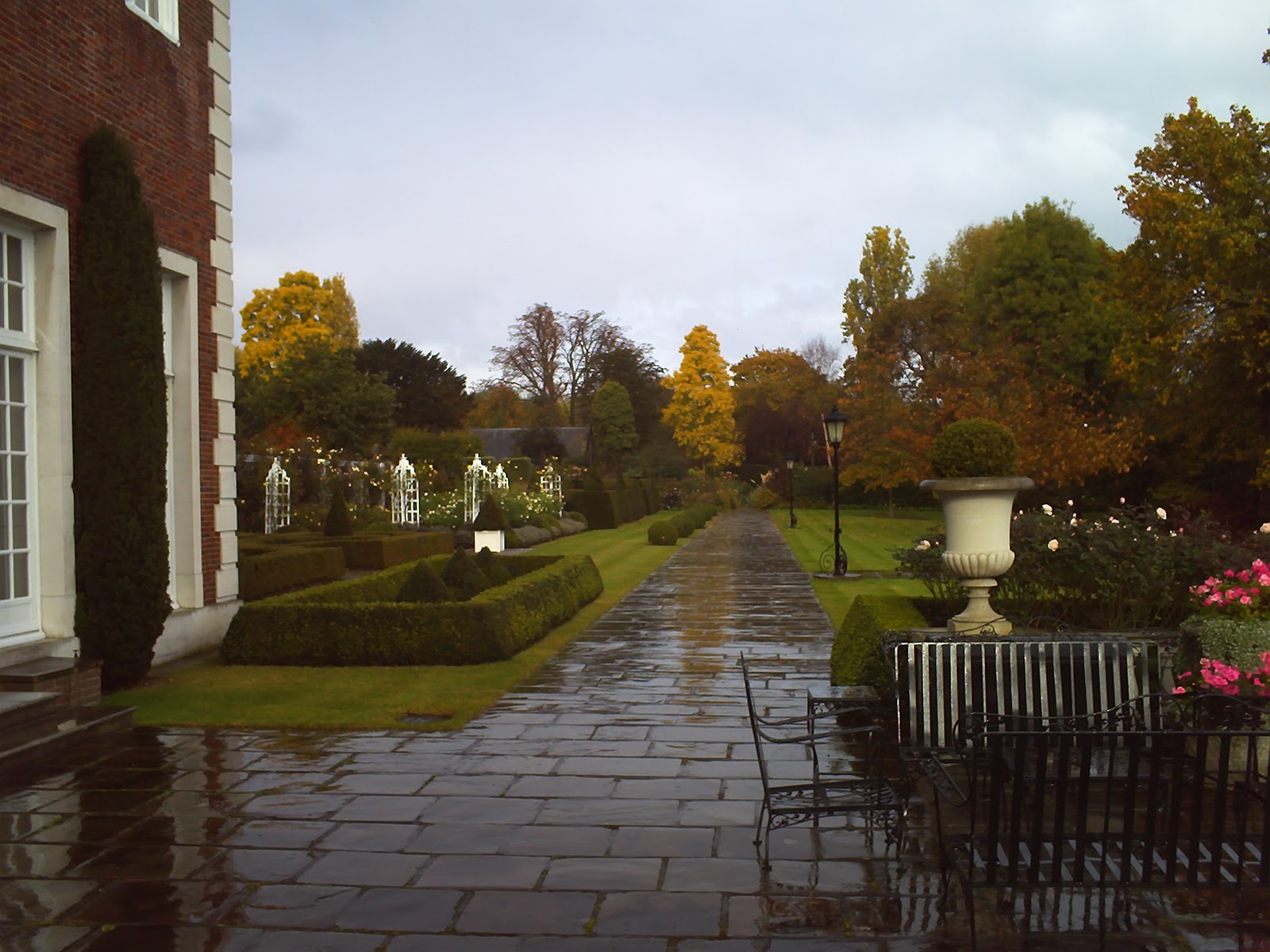
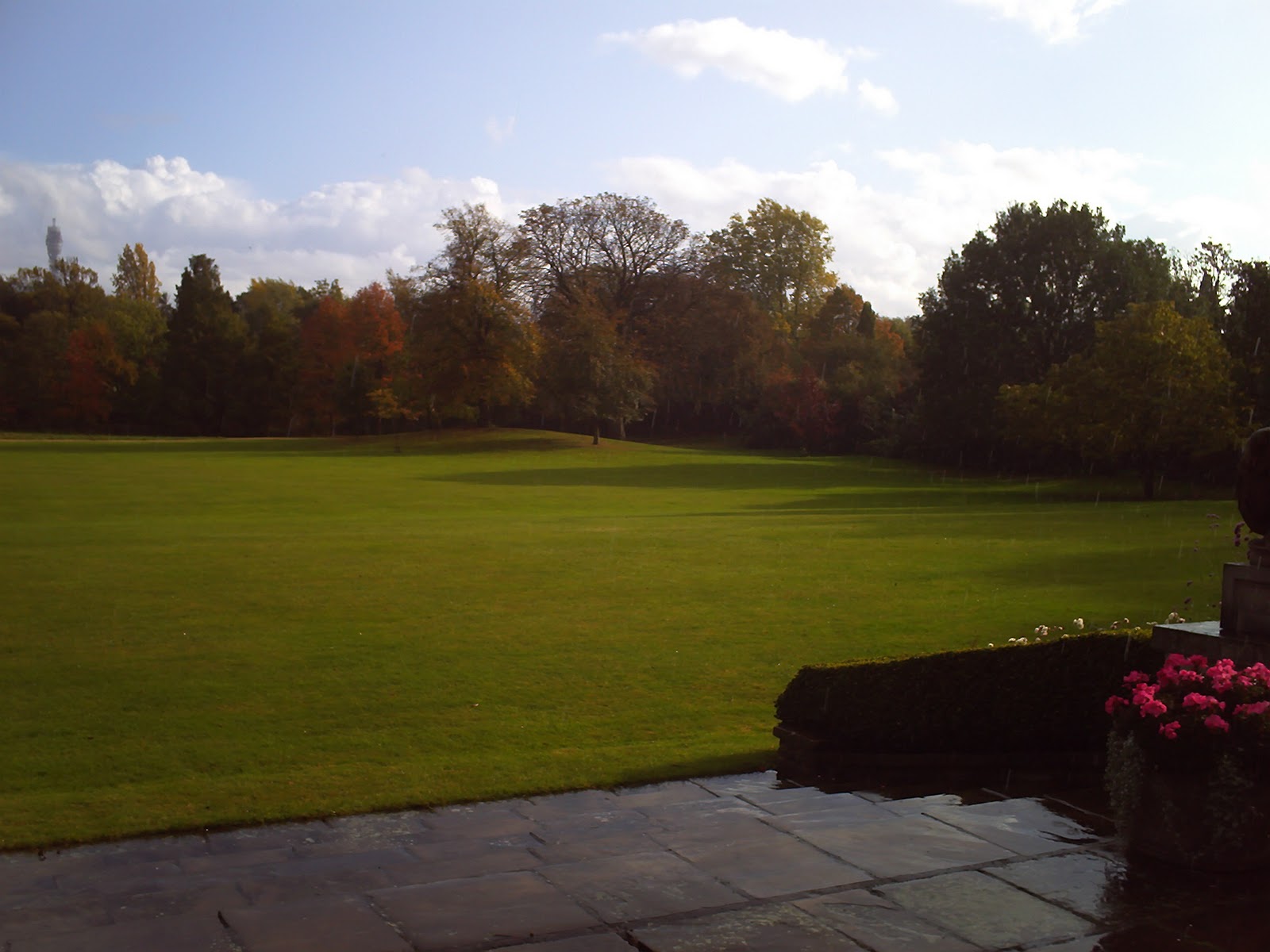
Winfield House, located on Outer Circle, Regents Park is the residence of the U.S Ambassador.  Furthermore, a little fact is that Winfield House is the second largest private estate in London, second to Buckingham Palace.  It was also used as an R.A.F base during WWII.  As you can see, the house is of significant importance and is a place where formaility is of the highest standard.

I must admit, it was slighly daunting approaching the residency.  In order to gain entry, I had to first walk by armed police officers, at the gate I had to present my I.D to the security staff (which they then kept until later on), then I got my badge, and only then was I able to enter.

However, all that procedure was definitely worth it to take a peek into one of London's biggest and best kept secrets.  I met with the Head Gardener, Steven Crisp, who is one of the nicest people I have had the pleasure of meeting.

He gave me an extensive tour of the grounds and in the house.  I took my muddy shoes off straight away, and feeling out of my depth in the house and did not dare touch anything for fear of breaking something.

Steven Crisp's role of Head Gardener extends way beyond the gardens.  He is also responsible for the floral arrangements within the house, re-designing them virtually every week or whenever the residency has an event on.  This is quite a demanding role, as well as maintaining the gardens, but it is a task which Steve fulfils to the highest level.  He is an extremely talented man, but a generous one, who is very willing to pass on his knowledge to others.

The next time I was to visit Winfield House, it would be to decorate the residency for Christmas...


Great Comp Garden and Dyson's Nursery - November 2011

In late November 2011, I got the chance to spend the day at Great Comp Garden, located in Kent. In addition to being a great stately garden, consisting of seven acres, it also doubles up as a Salvia nursery.  A specialist field of plant knowledge for the head gardener, curator and nurseryman, Mr. William Dyson.

William is a very talented horticulturalist who is a very knowledgeable man, and a very busy man at that.  There is always lots to be getting on with, whether he decides to spend time on the garden, or to spend the time spent inside the tunnels propagating Salvia's.  I would imagine that depends on whether it is raining or not!


This remarkable Kent Garden is a veritable plantsman's paradise. The year begins with Snowflakes & Hellebores, followed by Magnolias, Azaleas and Rhododendrons.  Furthermore, Summer brings a wealth of colourful, rare & exotic shrubs & perennials, especially Saliva's; these unusual and long flowering plants are particularly well represented at Great Comp with their display extending between May & October.

Due to the adverse weather conditions of November, we resided in the propagation tunnels where I spent the vast majority of the day propagating various Salvia's ready for selling or growing the following spring.
It is a task where you have to concentrate more you would think, as not every Salvia is propagated in the same way.  It was a great day, despite the gloomy weather and William Dyson is a great character.

He has already said to come back in the summer when there are more interesting things going on in the garden.  I look forward to visiting next time and reporting back on how much the garden has changed.

http://www.greatcompgarden.co.uk/

Orchard Dene Nursery - November 2011

Located in the beautiful English countryside of Henley resides Orchard Dene Nurseries.  This specialist perennial plant nursery is ran by the lovely Chris and Toby.  Their underpinning knowledge of plants is the reason why the nursery is still going strong after 25 years in the business.

The nursery produces a wide range of hardy perennials, grasses and ferns, with over 1400 different plants, selected and grown for their design merits as 'landscape performance plants.'  The nursery does not endorse a commercial approach, rather adopting to growing plants to suit and meet demands of top garden/ landscape designers.

The site in Henley includes stock beds, growing tunnels, propagation facilities and planted display areas. 

I was very privileged to spend the day with Chris and Toby down in Henley and they were very generous with their time.  They had a variety of tasks for me to complete, ranging from cleaning out the beds, weeding the plants, preparing orders, printing labels.  Even though this was in November and things were beginning to wind down, there was still a vast amount to complete.

It is not only until you see how a nursery operates that you realise just how much work has to go into it to make it work.  It is not the type of job that when you have done the 9-5 that is it.  There are always things that need to be done.

It is a testament that Orchard Dene is still one of leading suppliers of plants to top designers, with their extensive knowledge and high quality perennial plants, the nursery will remain one of the leading competitors in the industry.

Visit at
http://www.orcharddene.co.uk/index.php

Internship Placements

As part of the Internship at the museum, I am to spend days in industry with the top professionals.  This is to gain more experience in a wide variety of fields.  Therefore throughout the course of the year I will write about each placement.

Planting is my business, and business is good!

The Museum is now back open to the public and 2012 is going to be a very exciting year.  The Knot Garden is looking immaculate, which is strange for this time of year.  We have also taken the time to provide the Knot with a much needed boost of colour.

Within the Knot you can see the following;

Helleborus niger
Cyclamen coum
Primula vulgaris
Anemone blanda
Iris reticulata

These plants have been sourced from Covent Garden Flower Market, RHS Wisley Gardens and grown from seed at the Museum.

Moreover, there are a vast array of little treasures emerging from the dark depths of the soil in each segment of the Knot.  Soon the Knot Garden will be a sea of colour, and we will once again see it restored to its former glory.

The Knot Garden does peak late early spring to early summer so be sure to not miss it!

Sunday, 15 January 2012

An Early Spring?

I returned after the Chrsitmas break to the Garden Museum Friday 6th January 2012 to find the grass at the front swarming with Crocuses.  I could not believe what I was seeing!  This is far too early for such things to be emerging so soon!

On a similar note I found a Geranium in the garden with one flower on it.  It is not right!  I feel confused, but probably not as confused as the plants must be.

However, I thought we might have avoided winter, but in my opinion this cold snap that we are experiencing is exactly what we need.  They are beneficial to gardens as it helps to kill the pest and diseases lurking in the garden and keep population numbers down.

Furthermore, it feels so much more rewarding to look forward to the weather getting warmer, the nights staying lighter after you have come through the hardship of a cold winter.

For the current plants and bulbs that have already come up, there is no need to be alarmed about the frost getting to them.  It should only halt the growth of them and as soon as the weather warms uo again, the plant hormones (auxins) will be in high levels and continue the growth.

However, for all the plants which are not hardy, then make sure they are covered throughout this cold snap with a fleece or similar material or else the plant could really suffer.

The museum is currently closed to the public until the 23rd January, but you can walk through the church yard and indulge your eyes on the beautiful little crocuses that are out in flower and various other bulbs that are beginning to emerge.  Things are about to get more interesting in the garden.

Happy New Year to Yew!

Where to begin?  A new year is upon us, and what an exciting year that is ahead of us.  We have the Olympics and the Queen's Diamon Jubilee to look forward to.  Furthermore, we have a new horticultural year to look forward to.  As soon as the weather warms, there will be new life breathed into gardens all over, kick starting a haven of flowers, wildlife and a real buzz around the place.

The museum has been on a hiatus since December 23rd until January 23rd as we are taking this opportunity to give the museum an early spring clean.

My team of volunteers and I are taking this opportunity to get on top of outstanding tasks within the garden and using this time when there are no members of the public around, so I can make a mess and not have to worry too much about keeping things spotless.

Thankfully, we now over the Plane leaves dropping into every little spot you can possibly imagine!  We have now hopefully eliminated the rogue leaves, thus giving a much tidier appearance to the garden.

We have taken the time to mulch all the beds in the knot garden to keep the mositure in the soil, warm the soil and to provide more nutrients to the soil as the mulch breaks down.  This will provide just that extra bit of support through the winter (though to be fair, it seems that only now winter has decided to arrive).

I have taken the time to tackle the Yew hedge which seperates the knot garden from the long border outside the church.  Once upon a time, the yew was shaped into battlements, linking in with the battlements on St. Mary's Chruch, creating the effect of the building and garden as one entity. 

However, this effect has been lost over the years and has just been left to grow of its own accord.  I have taken the time to shape battlements back into the hedge but do not be alarmed at the drastic change you may see before you.

There will be a lot of brown exposed, but Yew (Taxus baccata) is a very forgiving hedge that can handle a seriously hard pruning session.  Moreover, when I give it a feed in Spring, it will rejuvinate, and the bare spots will green over come Summer, giving character and structure back to the Yew hedge.